Login   |   Register
NETWORK WITH US

How Did You Spend Your Stimulus?

By Christopher Schonberger
6/02/08
SHARE THIS: Share

Do you wonder what became of all the tax rebates handed out in the last couple months? How I Spent My Stimulus features user-uploaded stories and photos detailing what they did with their gift from Dubya. It’s sort of interesting to look at the categories

10 Myths About Life After College

By Gradspot Dot Com
6/02/08
SHARE THIS: Share

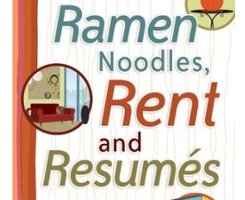
Our guest blogger today is Kristen Fischer, author of Ramen Noodles, Rent, and Resumes: An After College Guide to Life

Discovering Investment Options

By David Pekema
FILED UNDER:
SHARE THIS: Share
Quick Tips
  1. Start now – Even if you're just opening an online savings account, it's important to start investing as early in your working life as possible. For many great investment and savings calculators, including how your money can grow, visit: AOL Calculator.
  2. Safe bets – Opening either a CD or an online savings account is a great option for the conservative investor. The interest rate of return is comparatively lower than some of the riskier investment options, but the reason is simple—these accounts aren't at all risky.
  3. A happy medium – Bonds, mutual funds, and ETFs are often noted as striking the perfect balance between risk and reward investing. Investing in a bond nets a fixed interest rate in return, while mutual funds and ETFs are made up of many stocks, so the chances of all of them tanking are low.
  4. Risky business – Stocks are probably the #1 cause of heart-disease in the Western world. Essentially, with a stock you buy a share of the company and reap the benefits if the company is successful. If the company goes belly-up, so does your investment. Good luck.
  5. Play the field – You can afford to be a little riskier when you're young and don't have much to lose. It's best to practice investing now when you're fresh and bold, but make a habit of diversifying your portfolio rather than “laying it all on red.”

It’s hard enough to keep up with rent, utilities, food, and debt payments on a first year’s salary, which is why most recent graduates keep their money in the same li’l junior’s checking account that our grandmothers set up for us when we were ten. But keeping your money in a zero- or very-low-interest rate checking account

Cheat Sheets for New Chefs

By Joan Mitchell
5/29/08
SHARE THIS: Share

If anyone’s leading the “Web 2.0” charge these days it’s foodies—we’ve already brought you sites that tell you what flavors go together or offer meal recommendations based on your mood. But while those are pretty fun to play around with, this week I’ve found two sites that may have even more practical use

Guest Blog: Christine Hassler on "Smart Slacking"

By Gradspot Dot Com
5/28/08
SHARE THIS: Share

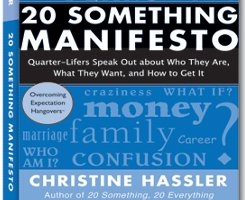
Christine Hassler is a life coach and speaker, and she's author of the new book 20 Something Manifesto. In the following excerpt from her book, Hassler describes the art of “smart slacking.” To learn more about her writings

Ice Cream for Dinner, and Other Small Tips for Saving Big Money

By
9/16/08
SHARE THIS: Share

Graduation from my Masters program is near. No permanent job is in sight. Money-saving schemes loom to the fore of my awareness. Fortunately, I am a rat! “Resourceful”, “scavenger”, “survival”—no, “danger”—is my middle name. Here are some money-saving tips

Borrowing Money After College

By Rachel Solomon
FILED UNDER:
SHARE THIS: Share
Quick Tips

  1. Say no to credit cards – When at all possible, avoid using credit cards as a line of credit (of course, buying stuff is fine if you can pay off the balance each month). The interest that you have to pay on most cards is about what you’d expect if you borrowed money from the Mob.
  2. Suitable borrowing options – While we don’t recommend carrying debt on credit cards, lines of credit from a bank such as Wells Fargo and Commerce are a good alternative. P2P lending sites like Prosper.com and LendingClub are another option. And for loans on cars, businesses, and other big-ticket items, check out traditional bank loans.
  3. Help from the ‘rents – Don’t be ashamed to ask your family to bail you out when you’re in a jam. No other source will be as generous with terms. Just be sure to follow the IRS family lending guidelines.
  4. Maintain your credit – An important element of borrowing money is ensuring that you have good credit. Get a free credit report at from Equifax, Experian, or TransUnion. Then, learn how to build your credit so that you’ll be able to get that mortgage down the line.
  5. Start saving – The easiest way to stop borrowing is to begin saving. Get into the habit of putting even a small sum of your paycheck into some type of savings account or investment portfolio every month. Learn more about the power of investing and let your money work for you.

Many students form addictions in college, and I had a bad one. Everyone around me was doing it too; it was so easy. So accessible. I started to want it more, to need it. I’d get one supply and run through it in a night, leaving me begging for another dose the next day

Gradwatch on the NYT

By Dan Marley
5/19/08
SHARE THIS: Share

In another edition of “Gradwatch on the NYT,” we troll The New York Times for grad-related stories that might have slipped through the cracks

Free Donald's? The Greatest Day Ever Continues...

By Christopher Schonberger
5/15/08
SHARE THIS: Share

It’s a perfect storm! Just as I’m beginning to feel physically ill from free iced coffee day at Dunkin’ Donuts (you can’t argue with the Flavorcaster, even when it says “blueberry”), this news hits me: It’s also FREE CHICKEN SANDWICH DAY at McDonald’s

Top Ten Ways to Drop $600

By Christopher Schonberger
5/06/08
SHARE THIS: Share

Starting this month, those coveted $600 tax rebates from the government will start hitting the mailboxes of recent grads who kept it real last year and didn’t make very much money. The big question is

©2010 Gradspot LLC