

Buying Renter's Insurance


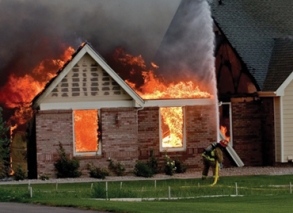
- Don’t risk it – Two common myths worth debunking are that landlord’s insurance protects the tenant and that renter’s insurance is expensive. So, after paying $150 a month for 1,000 channels, isn’t it worth $17 to protect the precious flat screen you watch them on?
- Get tailored – Renter’s insurance protects you from the most common disasters and larcenies, such as fire, lightning, smoke, theft, and vandalism. But you can ask for additional protection for region-specific disasters if you live below sea-level or on a fault-line. Take care to tailor your insurance policy to fit your specific needs—it’ll be worth it.
- Bountiful benefits – Renter’s insurance covers all of your personal belongings as well as the medical and legal expenses associated with personal injuries. It will also pay for temporary housing in a similarly priced apartment if yours becomes unlivable due to fire or another disaster.
- Inexpensive insurance – Polices run between $150-$300/yr, and increasing the deductible will lower that price. It’s easy to dismiss, but you’ll be kicking yourself for passing on insurance when your friend lights his fart at your birthday and incinerates your couch.
- Documentation – Write a list of all your personal possessions including prices and receipts and be prepared to present it in the event of a disaster. Keeping a written (and even a photo/video) record of your property is the key to reimbursement.
After college graduation, there are often a series of other graduations: Natty Ice to Bud Light; 1990 20” TV to 2007 42” Sony flatscreen; $150 canvas futon to $1,500 leather couch. But what happens to all of that accumulated wealth in the event of lightning or larceny
? It’s a common misconception that a landlord or condo association’s insurance will cover damage to a tenant’s goods in case of a catastrophe. Though the owner’s insurance will pay for structural building damage, it won’t protect personal property. Once you move into your place, you are personally liable for what goes on in the apartment. So how do you handle that responsibility?
The simple solution is renter’s insurance: like a condom, it’s low in cost ($150-300/yr) but high in benefits. Not only does it cover individual belongings, but it gives you a place to crash when your pad is trashed and covers liability in case of any injuries. Candles, robberies, volcanic toilets—the list of possible disasters is not only limitless, but, in the world of post-grad partying, not all that unlikely. Ultimately, $17 a month is a pretty cheap price to pay for peace of mind.
Disasters and Delinquents: What Does It Cover?
Most basic plans cover fire, lightning, theft, smoke, vandalism, and wind/hail storms. Included with some, or offered as an add-on, are damage due to floods, burst pipes, riots, aircraft and vehicles, freezing of plumbing, falling objects, explosions, volcanic eruptions, and weight of snow, ice, or sleet. If you're living in a flood-, hurricane-, or earthquake-plagued area, protection from those disasters may cost additional dinero. You should be able to tweak the plan to fit your needs, but sadly no plan will cover a drunk friend urinating in a Gucci-filled dresser drawer that he thought was the toilet (personal experience…except replace Gucci with Gap).
An Advantage in Adversity: What Does it Do?
- Shields Your Stuff – Everything from a Dell computer to designer curtains can be covered by renter’s insurance. Pricey possessions, like grandma’s fur coat or grandpa’s Joe DiMaggio rookie card, may require an additional fee.
- Provides a Provisional Pad – If a fire takes out the wall, you won’t have to relocate to a bench at the bus station. The policy will pay for temporary housing to a similarly priced pad or hotel, usually for up to 12 months until the repairs are made, rebuilding is completed, or a permanent abode is found.
- Insures Injuries – When a soon-to-be-ex friend slips, breaks her pelvis and sues, renter’s insurance will help pay for medical and legal expenses. Renter’s insurance will not help find better friends.
Penny Wise: How Much Does it Cost?
Premium price depends on a number of factors, such as how much is actually insured, what area the digs are in, if any additional coverage is needed, and what insurance company is used. With no additional coverage, a plan will typically run $150-300/yr—a small price to pay to quell the destruction gods. Paying in that range will give $30-35,000 of coverage on personal items and $100-300,000 in liability. Increasing the amount paid out of pocket before insurance kicks in (deductible) will lower the price. Deductibles are generally offered at $250, $500 or $1,000.
Though almost all plans are cheap, don’t take the first offer given; comparison shop and demand discounts. A home equipped with things like dead bolts or smoke detectors can lower plan costs, so check out these money-saving tips. To speed the process and get the best deal, be familiar with insurance terms prior to speaking to a company representative. Finally, research different insurance companies or check local bank offers. Get online quotes from GradGuard, Allstate, Geico, and State Farm. If you're thinking of getting a dog, be wary that any insurance companies are reluctant to give policies to people with more aggressive breeds such as Dobermans, Rottweillers, Pitbulls and German Shepherds.
For more info, check out this GradGuard summary.
From Devastation to Compensation: What About Reimbursement?
The key to recovering the most money possible is documentation. In addition to a written list of all personal property with prices and receipts (if possible), make a video with Billy Packer-inspired commentary on all items. It will be the most mind-numbing but potentially life-saving footage ever shot (other than How to Lose a Guy in 10 Days). Make a copy of both the list and the video and keep one version of each outside the home in case of flood or fire. Reimbursement can come in two kinds of payouts: Actual Cash Value (ACV) or replacement cost. Basic policies will pay ACV, which means compensation is based on the current price of the item minus the depreciated value. So, for a television purchased five years ago at $1,000, the payback will be significantly less. With replacement cost, the insurance company will reimburse as much as a new, comparable television would run. Since plans are inexpensive to start, paying a little extra (about 10% more) for replacement cost is probably worth it.



All States
Alabama
Alaska
Arizona
Arkansas
California
Colorado
Connecticut
DC
Delaware
Florida
Georgia
Hawaii
Idaho
Illinois
Indiana
Iowa
Kansas
Kentucky
Louisiana
Maine
Maryland
Massachusetts
Michigan
Minnesota
Mississippi
Missouri
Montana
Nebraska
Nevada
New Hampshire
New Jersey
New Mexico
New York
North Carolina
North Dakota
Ohio
Oklahoma
Oregon
Pennsylvania
Rhode Island
South Carolina
South Dakota
Tennessee
Texas
Utah
Vermont
Virginia
Washington
West Virginia
Wisconsin
Wyoming
Comments
(0)POST YOUR COMMENT